Everyone always gushes about Hilton Head Island’s natural beauty—and we don’t disagree, they have a reason to gush! There’s a very noticeable lack of neon signs, billboards, and really anything that’s designed to stick out, for that matter. Throughout your day, you’ll only see greenery, beautiful beaches, and architectural styles that blend in with the landscape on purpose.
But at night, that’s when the feeling-like-you’re-in-the-middle-of-nowhere bliss sets in. Maybe it’s the main reason the trip was booked!
It takes a while to get used to driving at night, as there are very few street lamps to guide your way and it’s just plain dark. That darkness, though, makes Hilton Head an incredible place to look up. With little light pollution across much of the island, the night sky comes alive. Whether you’re stargazing from the beach or your villa balcony, you’ll get a clear view of constellations shifting with the season and perhaps even catch a glimpse of a planet or two shining bright above the coastline.
Here is a list of what to look out for:
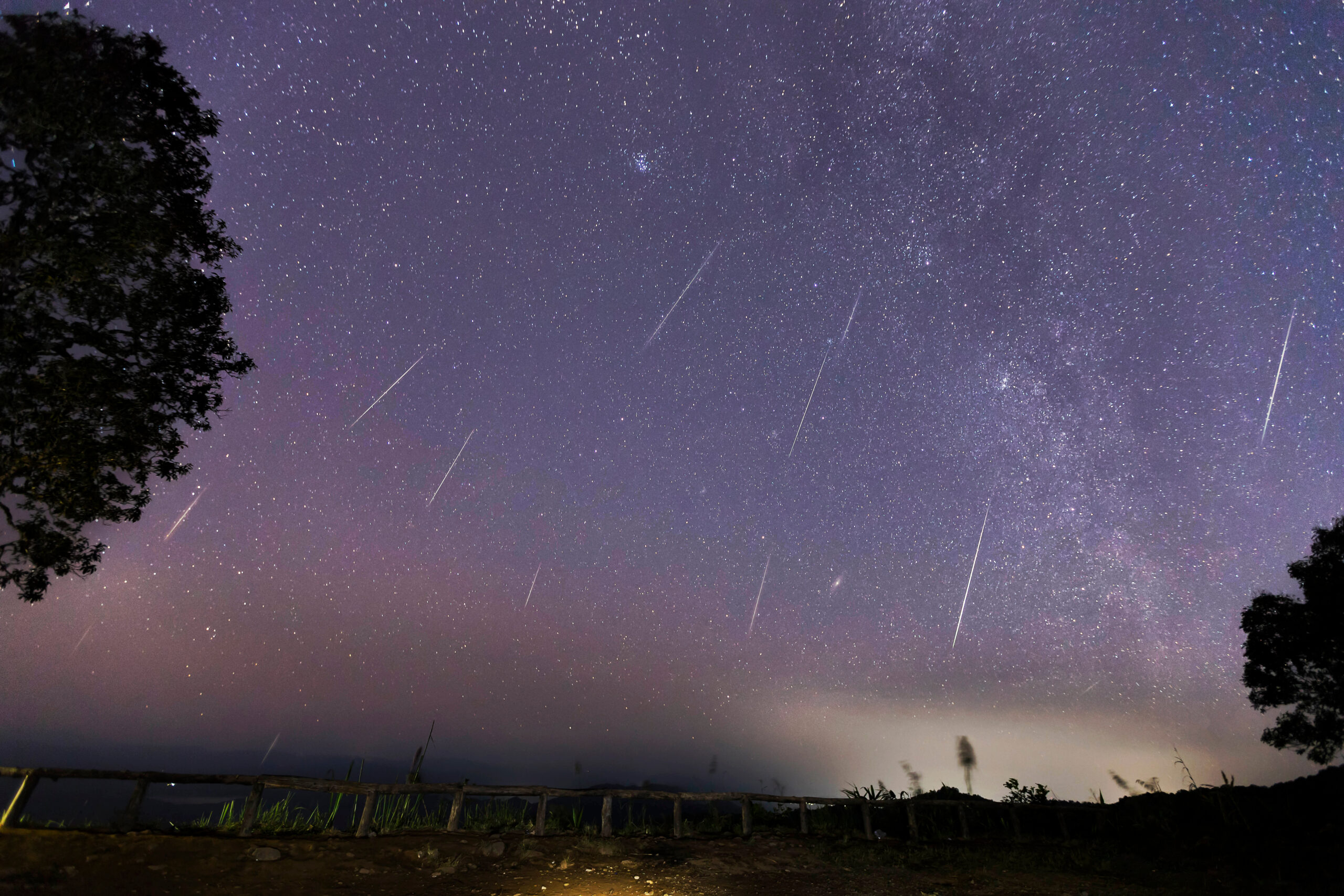
Geminid Meteor Shower
November 19th-December 24th; Peak: December 13th-14th
Peaking around December 13–14, this is often the brightest and most reliable meteor display of the year with as many as 50 to 100 meteors per hour under ideal conditions. The Geminids are known for their slow, colorful streaks that seem to radiate from the constellation Gemini, visible high above the Atlantic after 9 p.m.
December Solstice
December 21st
The December Solstice is the shortest day of the year for the Northern Hemisphere, marking the official beginning of winter! Conversely, this day marks the longest day of the year for the Southern Hemisphere.
Ursid Meteors
December 21st-22nd
Just days after the Geminids fade, the Ursid meteor shower offers a quieter encore around December 21–22, coinciding with the winter solstice. Though smaller in number—usually about 5 to 10 meteors per hour—the Ursids can produce unexpectedly bright streaks.
Wolf Moon
January 3rd
The New Year’s first Full Moon comes up pretty quickly in 2026, with January 3rd seeing the Wolf Moon. January’s Full Moon is always called the Wolf Moon, and this stems from both Native American tribes and early European settlers hearing the howling of wolf packs around this time.
Quandrantid Meteor Shower
January 3rd-4th
Peaking the night of the 3rd–in conjunction with the Wolf Moon, no less–the Quandrantid Meteor Shower is the first major meteor shower of the year and only lasts a few hours. The best time to view this amazing event in Hilton Head is the hours just before dawn, so set your alarms!
Jupiter at Opposition
January 10th
The largest planet in our solar system will make it easier for us to catch a glimpse of it this January, as the massive planet will be at opposition. What does that mean exactly? This means that Jupiter will be at the total opposite side of Sun (for us at least), and the planet can be seen all night long. The good news is, Jupiter is already the fourth brightest object in the sky, so you’ll be able to spot it pretty easily.
Snow Moon
February 1st
February’s Full Moon arrives right at the beginning of the month this year, and is named after the heavy snowfall that winter brings to North America during this time. Other names for this moon stemming from different cultures include the Bald Eagle Moon, Bear Moon, and more.
Mercury at Greatest Elongation East
February 19th
Want to spot Mercury? Mark your calendars for February 19th, as the planet will be at the furthest away from the sun. Mercury is the smallest and closest planet to the Sun, and normally that makes it a challenge for us to see it. In this case, it being “East” means you can see it during the evening hours. The difference between Jupiter being at Opposition earlier in the year to this common event with Mercury, is that Earth is in between the Sun and Jupiter, while Mercury is just as far as it can be away from the Sun.
Total Lunar Eclipse
March 2nd-3rd
While good weather is still needed for a good view of the Total Lunar Eclipse, this will be your chance of seeing this kind of celestial event until late 2028! This eclipse will be able to be seen across the Americas, so consider yourself lucky if you can see it during your time on Hilton Head Island! The best viewing time from the island will be around 6:30am.
Worm Moon
March 19th
What sounds pretty creepy crawly, actually means good news for the Northern Hemisphere! Earthworms start to emerge from the ground only once the ground actually thaws, meaning spring and warmer weather is on the way!
March Equinox
March 20th
Spring has finally arrived! Regardless of what old, Punxsutawney Phil says back in February, March 20th marks the official first day of spring in the Northern Hemisphere. For many of you, Spring Break has already arrived or is just around the corner, so we’ll see you on the island very soon!
We found a really neat and useful tool for those wishing they could easily point out constellations. Visit Stelvision’s Sky Map and find a free customized map for your location, date, and time!
